
Recent prices
Brisbane


4 min read
Note: This is a general approach and each carrier and service company handle things differently.
Moving a motorbike across Australia doesn’t need to be a headache. With the right prep, the correct handling, and a reputable carrier, you can get your bike from A to B safely and without drama. Here are practical, Aussie-specific tips to protect your pride and joy on long interstate hauls.
Safety starts with who you book. Look for licensed, insured providers with proven experience moving bikes, not just cars. Ask about how they secure motorcycles, what equipment they use, and what’s included in the cover while your bike is in transit. If you need a hand comparing options, see our interstate motorcycle transport services to match your route and timing.
Give the bike a thorough clean so existing marks are easy to spot. Photograph all sides (plus close-ups of any pre-existing scuffs) with timestamps; these photos are handy for peace of mind at delivery. Remove loose accessories and personal items, luggage, phone mounts, tool rolls, helmets, because personal belongings generally aren’t covered under vehicle freight insurance. More on that here: Can I pack the vehicle with personal items?
Check tyre pressures, fold in mirrors (if applicable), and ensure the battery is secure. If your bike has an alarm or tracker, switch transport modes or temporarily disable notifications to avoid false alerts while it’s on the truck.
Most carriers prefer a small amount of fuel in the tank, just enough for loading and unloading without adding unnecessary weight. If your bike has known leaks, fix them before the move. Ensure oil and coolant caps are tight, and close any petcocks. If the bike will be crated, ask the provider if they have any extra requirements around fuel or battery isolation.
Non-running or damaged bike? No drama, just be upfront. Carriers can arrange winching or specialised loading gear, but they need to know before pickup to avoid re-quotes or aborted collections. If your handlebars are locked, supply the key or authorise the carrier to use skates/dollies to position the bike safely. Got a lowered, tall, or heavily modified setup? Share photos and measurements when you request a quote so the right truck and ramp angles are allocated.
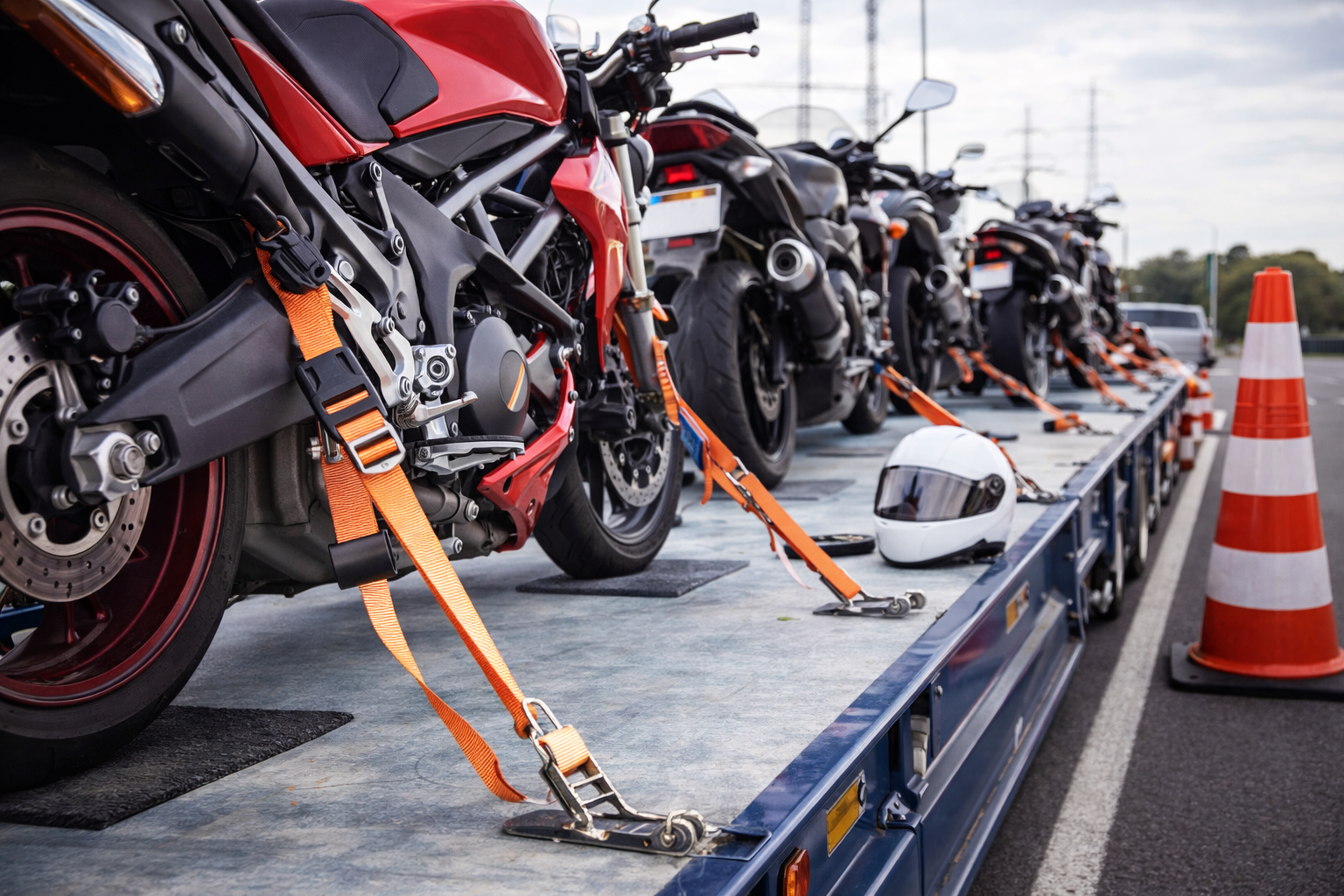
The biggest risk to motorcycles during transport is poor restraint. Quality operators use soft loops, purpose-built straps, and multiple anchor points to prevent compression or chafing. Fork braces or block inserts can reduce stress on suspension during long journeys, and front wheel chocks help keep the bike planted. If your bike has delicate fairings or aftermarket bars, tell the driver where the safest anchor points are.
If you’re moving a freshly detailed bike or one with delicate paint, PPF, or polished metal, ask about protective wraps or covers that won’t trap grit. Avoid heavy covers that can flap and scuff clear-coat over long distances. For dusty or remote routes, a breathable wrap layer can help, just ensure it’s applied to a clean surface.
On pickup, be present (or nominate someone) and set aside a few minutes to walk around the bike with the driver. Note the condition and keep your own photos. At delivery, repeat the process before you sign off. If something’s not right, record it on the paperwork and take photos on the spot; then contact support promptly so the claims process can start smoothly. For timing expectations, see How long does it take to move a car? The guidance broadly applies to motorcycles too.
Reputable transporters carry Transit Insurance / Carrier’s Liability while your bike is in their care. It’s sensible to ask for a Certificate of Currency and confirm what’s covered, any excess, and how to lodge a claim if needed. If your bike is high-value or highly modified, consider optional extra cover for added peace of mind. You can read more on cover basics here: Is my car insured? (applies generally to vehicle freight).
If you’re coordinating a move with a trailer, ute, or additional toys, we can bundle solutions via our interstate trailer transport network to keep logistics simple.
Australia’s distances, weather, and roadworks can influence routing and ETAs. Book early around peak periods, keep your phone handy on pickup/delivery days, and let us know quickly if access details or dates change so we can adjust without disruption. If you need help at any point, our team is easy to reach via Contact Us.
Key takeaways
National Car Movers connects you with vetted, fully insured Australian carriers who know bikes and handle them properly, end of story. Get transparent pricing, clear comms, and the right setup for your route.
Get an instant quote or call 1300 396 099 to speak with our local team.