
Recent prices
Brisbane


4 min read
Note: This is a general approach and each carrier and service company handle things differently.
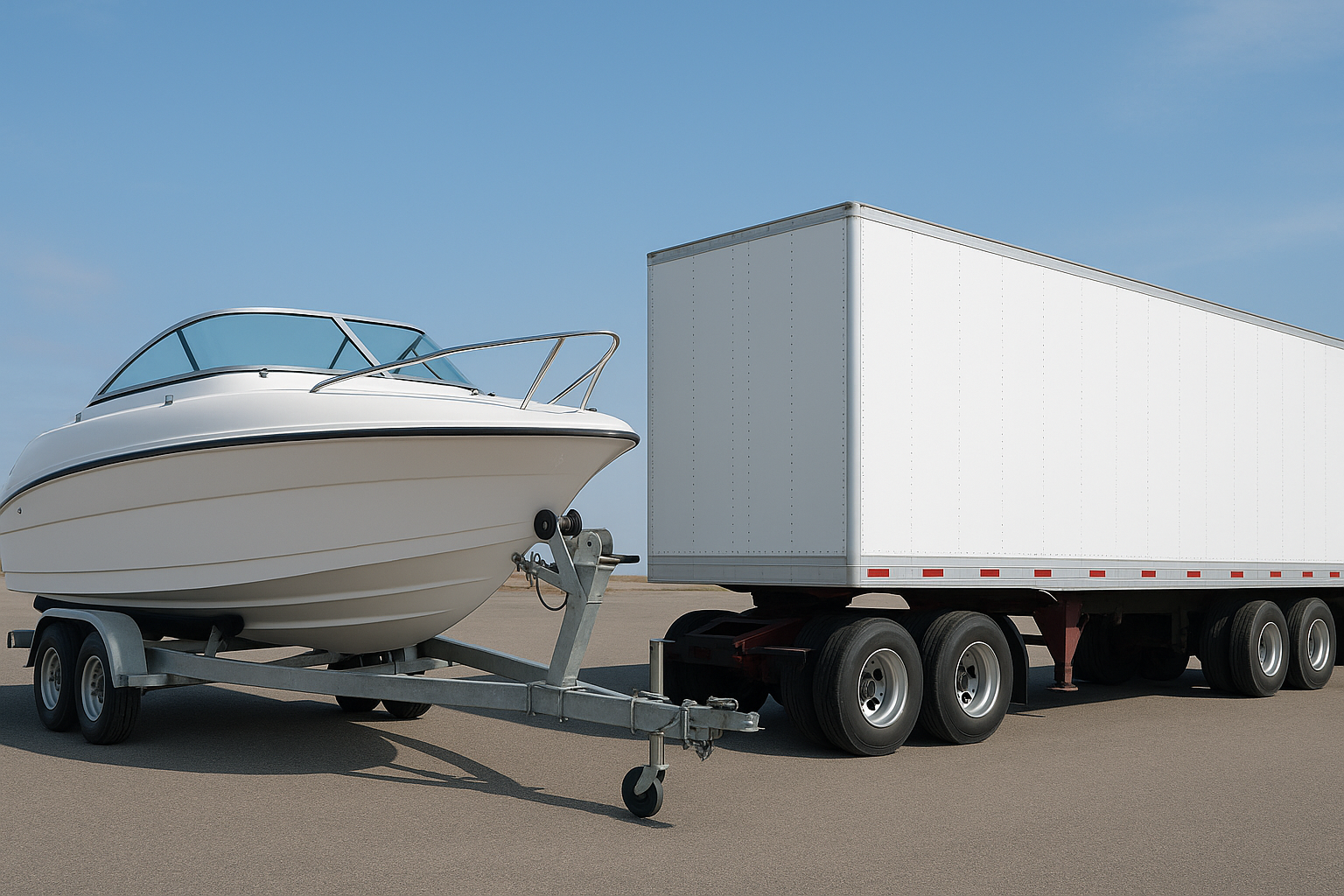
Transporting trailers interstate or over long distances across Australia requires a professional approach, but not all trailers are the same. Two of the most commonly moved types are boat trailers and cargo trailers, and while both fall under the umbrella of trailer transport, they have distinct differences in how they’re handled, what equipment is needed, and the regulations involved.
Whether you’re relocating, selling, or purchasing a trailer, understanding the key differences between boat trailer and cargo trailer transport will help you plan better, avoid delays, and ensure your trailer arrives safely and on time.
A boat trailer is specifically designed to carry a boat. These trailers often feature adjustable supports, rollers, or bunks that cradle the hull. They’re typically longer and more open than standard trailers and may have a V-shape to accommodate the boat’s form.
Need help moving your boat? Visit our interstate boat transport service page for full details.
A cargo trailer (also called an enclosed trailer or box trailer) is an enclosed unit designed to carry goods, tools, or equipment. These trailers come in various sizes and are often towed behind utes or vans.
Looking to move your box or equipment trailer? Check out our interstate trailer transport services for tailored solutions.
| Factor | Boat Trailer | Cargo Trailer |
| Shape & Dimensions | Often longer, with V-shape and open frame | Enclosed and rectangular, standard dimensions |
| Weight Considerations | May be lighter but longer; boat weight adds complexity | Enclosed structure may be heavier, especially when loaded |
| Loading Method | May be towed or winched, depending on roadworthiness | Often towed or lifted using flatbed or tilt trays |
| Protection Required | Requires additional weather protection | Already enclosed, contents usually protected |
| Permits Needed | OSOM permits often required | Permits less commonly needed unless oversized |
| Specialised Carriers | May need marine-specific carriers | General trailer carriers often sufficient |
At National Car Movers, we partner with experienced, fully insured carriers who specialise in both boat and cargo trailer transport. Whether your trailer needs to be towed, winched, or lifted, our network can handle it with professional-grade equipment and attention to detail.
We provide:
Key Takeaways
Not sure which service suits your trailer? Let our team help. From recreational boat trailers to heavy-duty cargo units, we’ll match you with the right carrier for your needs — Australia-wide. Get an instant quote today or call 1300 396 099 to speak with our local experts.